
Close



Article written by Samantha Lim, Senior Marketing Executive
There is something oddly satisfying about seeing two things you already know and love show up together. Maybe it is a cup of ZUS Coffee paired with Mamee Monster, your favourite childhood snack turned into an ice cream flavour, or Bichi Mao showing up on a limited-edition acne patch. You might not realise it at first, but these collaborations are doing more than creating a limited-edition product. They are tapping into something much more powerful: familiarity.
Malaysian brands are increasingly finding that one of the easiest ways to get people interested is not always to introduce something completely new, but to combine two things they already recognise. And when those two things happen to be homegrown brands or local creative IPs, the result feels even more personal. It is marketing built around a simple idea: if Malaysians already have an emotional connection with both sides of the collaboration, bringing them together can create a new kind of attachment to the product.
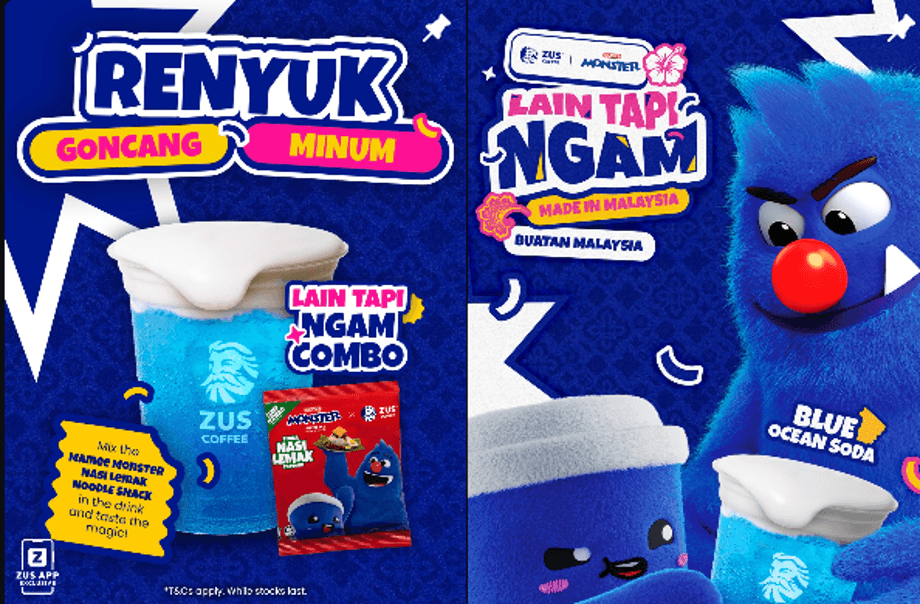
Take ZUS Coffee and Mamee Monster’s “Lain Tapi Ngam” collaboration. The partnership brought together two very different Malaysian personalities, ZUS’ Blue Buddy and Mamee Monster, after the two mascots playfully traded jabs online. What started as a social media exchange eventually turned into a full collaboration around the idea that two things can be completely different and still work surprisingly well together.
On paper, coffee and a childhood noodle snack do not exactly sound like an obvious pairing. That is precisely why it works. Mamee Monster brings years of childhood familiarity, while ZUS brings a newer, social-first Malaysian identity. Put them together and suddenly the collaboration feels less like two brands selling something and more like two parts of Malaysian culture having a conversation.
The campaign also leans into familiar flavours, playful characters and limited-edition merchandise, giving people more reasons to stop, look and, inevitably, share it with someone else. You do not necessarily need to be a loyal customer of both brands to understand the joke. You already know what Mamee Monster is. You already know ZUS. The fun comes from seeing what happens when the two worlds collide.
That is the thing about nostalgia in marketing. It does not necessarily mean recreating the past exactly as it was. It is about taking something people already have a feeling towards and giving them a reason to experience that feeling again.
And food is particularly good at doing this because taste is so closely tied to memory. A packet of Mamee, a slice of Secret Recipe cake or a Gardenia Twiggies snack can instantly bring you back to school breaks, family outings or that one snack your parents always bought.
Inside Scoop has practically turned this idea into a marketing platform with its Lokal Legends campaign. The series brings together the ice cream brand with familiar Malaysian names, transforming products and flavours people already recognise into limited-edition ice cream. The 2026 edition, for example, features collaborations with brands including Beryl’s, BOH, Farm Fresh, Gardenia, Mister Potato, Oriental Kopi, Secret Recipe, Thumbs and ZUS Coffee.
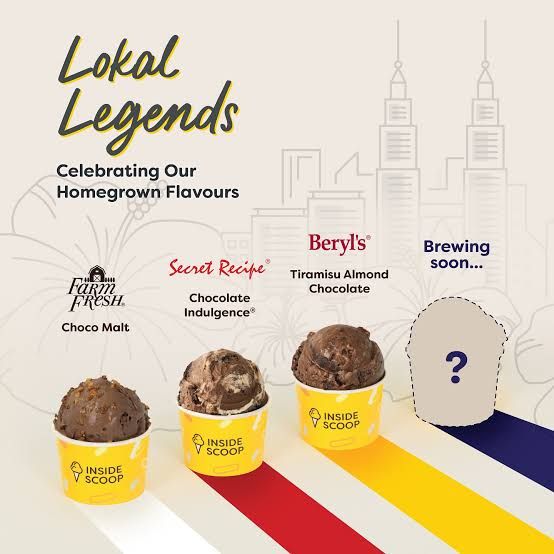
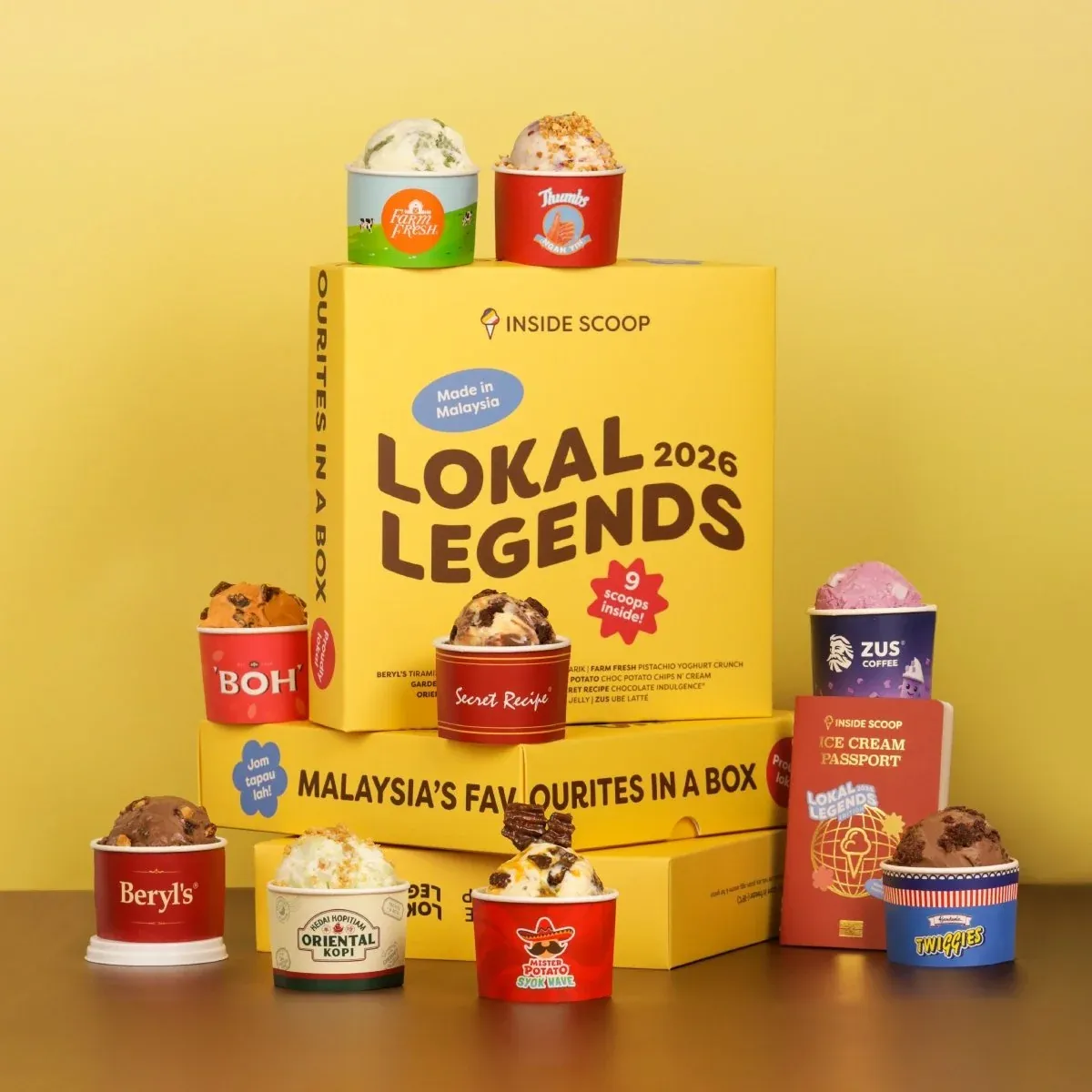
What makes Lokal Legends especially interesting is that the nostalgia marketing does the heavy lifting before consumers even taste the product. You see names like “Twiggies”, “Kaya Butter Toast” or “Chocolate Indulgence” and you already have an idea of what it might taste like. The curiosity comes from the twist: what happens when that familiar flavour becomes ice cream?
It is a simple formula, but an effective one. Take something people already love, put it in an unexpected format and suddenly you have a product people want to talk about.
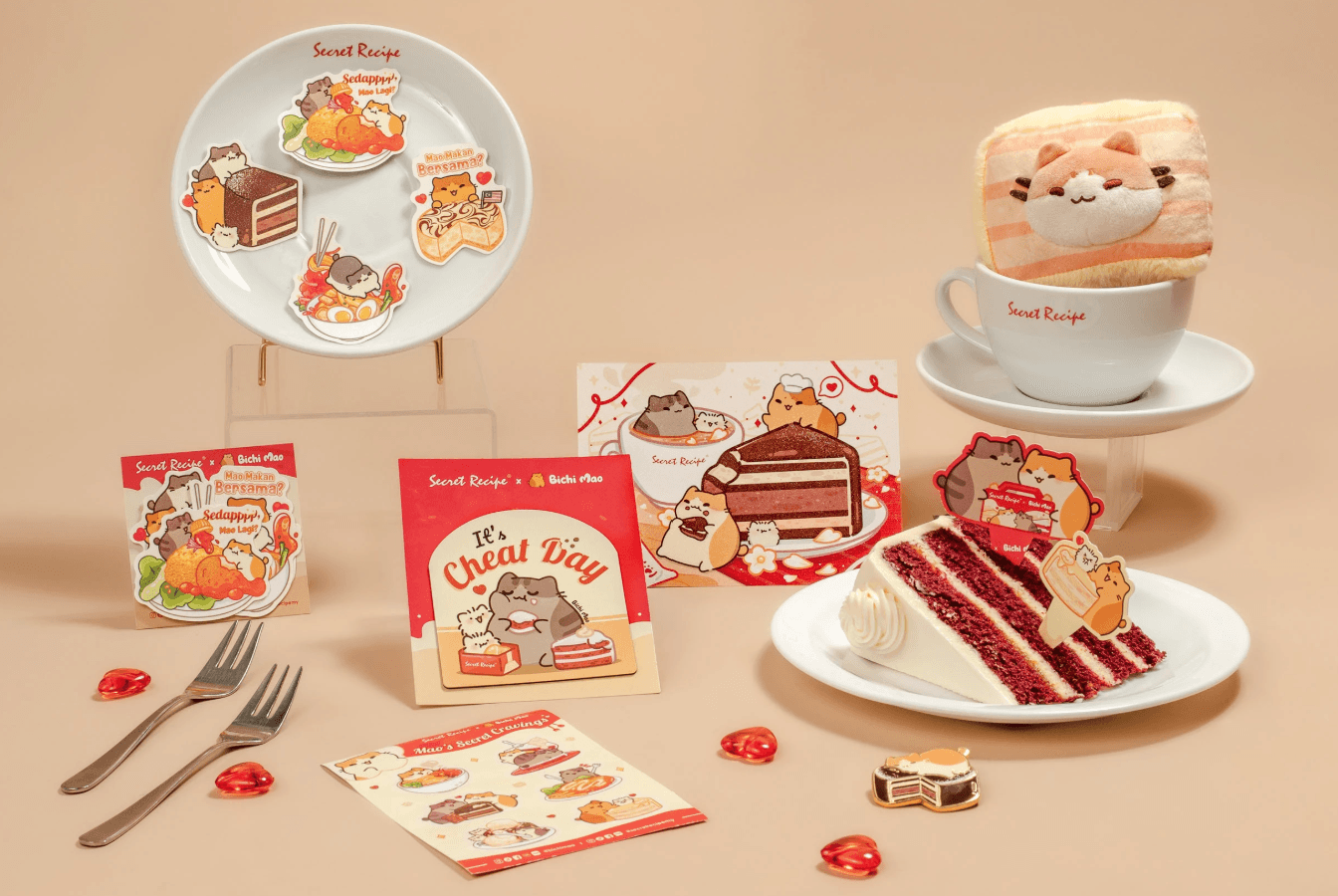
The same idea can be seen in Secret Recipe’s collaborations with Bichi Mao. In 2025, the cake chain teamed up with the homegrown cat character for its “Sweet Mao-ments” campaign, bringing Bichi Mao into Secret Recipe stores alongside limited-edition desserts and collectibles.
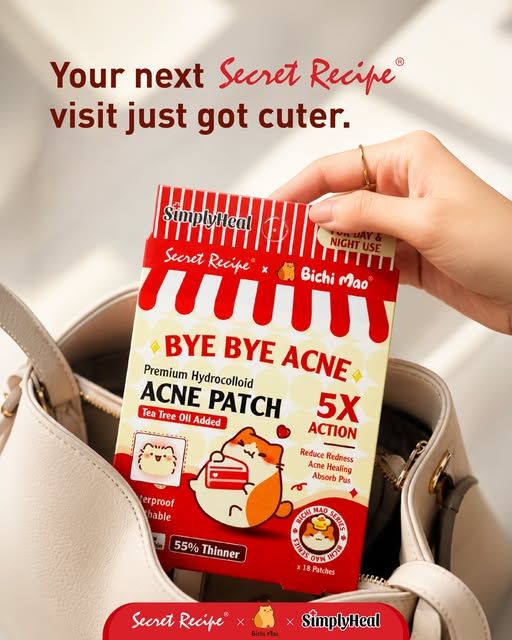
The partnership has since moved into an even more unexpected category. In 2026, Secret Recipe, skincare brand SimplyHeal and Bichi Mao came together for a limited-edition acne patch collection. Yes, acne patches. Cake, skincare and a cat character might sound like three completely unrelated worlds, but that is also what makes the collaboration interesting.
Secret Recipe contributes its familiar brand presence, SimplyHeal brings the product, while Bichi Mao brings the personality and cultural relevance that makes the product feel collectible. The collaboration shows how local creative IPs can move beyond being “just a character” and become a recognisable part of how brands communicate with consumers.
Bichi Mao is particularly interesting because its value is not simply that the illustrations are cute. The Malaysian-born webcomic cat has built a sizeable following and an identity that people already recognise. It comes with an audience, a personality and a world that consumers want to interact with. For brands, that means they are not starting the conversation from zero.
This is where the idea of supporting local businesses gets a little bigger.
Buying from a Malaysian brand is one thing, but collaborations like these show how commercial brands can also create opportunities for local IPs, artists and creators to become part of mainstream culture. The creative ecosystem does not have to exist separately from the business ecosystem. In fact, they can make each other more interesting.
And consumers seem to enjoy that cross-industry collaboration because it feels less manufactured when the connection makes sense. A Malaysian snack brand meeting a Malaysian coffee chain feels familiar. A Malaysian ice cream brand turning household favourites into flavours feels familiar. A Malaysian character appearing on a homegrown product feels familiar.
Of course, not every collaboration works simply because both brands are Malaysian. There still needs to be a reason for the pairing. The best collaborations find a natural overlap in audience, personality, culture or memory. ZUS and Mamee found theirs in the contrast between two mascots and the idea of being “Lain Tapi Ngam”. Inside Scoop found it in flavours Malaysians already know. Secret Recipe and Bichi Mao found it in the appeal of bringing a familiar local character into everyday experiences.
That is probably why these collaborations can feel so effortless to consumers. We are not being asked to learn an entirely new brand story. We are being given something we already recognise, just with a slightly different twist.
And somewhere between the limited-edition drink, the collectible charm and the ice cream flavour that reminds you of primary school, the brands have done something quite clever. They have turned familiarity into curiosity, curiosity into conversation, and conversation into a reason to buy.
Maybe that is the real appeal of Malaysian local collaborations. Malaysian culture does not always need to be packaged as something grand or overly patriotic. Sometimes, it is simply Mamee Monster sitting next to your coffee, your favourite childhood snack becoming ice cream, or a familiar cartoon cat showing up somewhere you did not expect.
It is local culture, just remixed. And apparently, that is pretty “ngam” after all.
Got two brands (or a local icon) worth pairing? Let's build a collaboration Malaysians actually want to talk about! Get in touch with Kingdom Digital.



November 28, 2025
May 22, 2025
November 4, 2024

 Thank you for your enquiry! We'll respond shortly.