Close
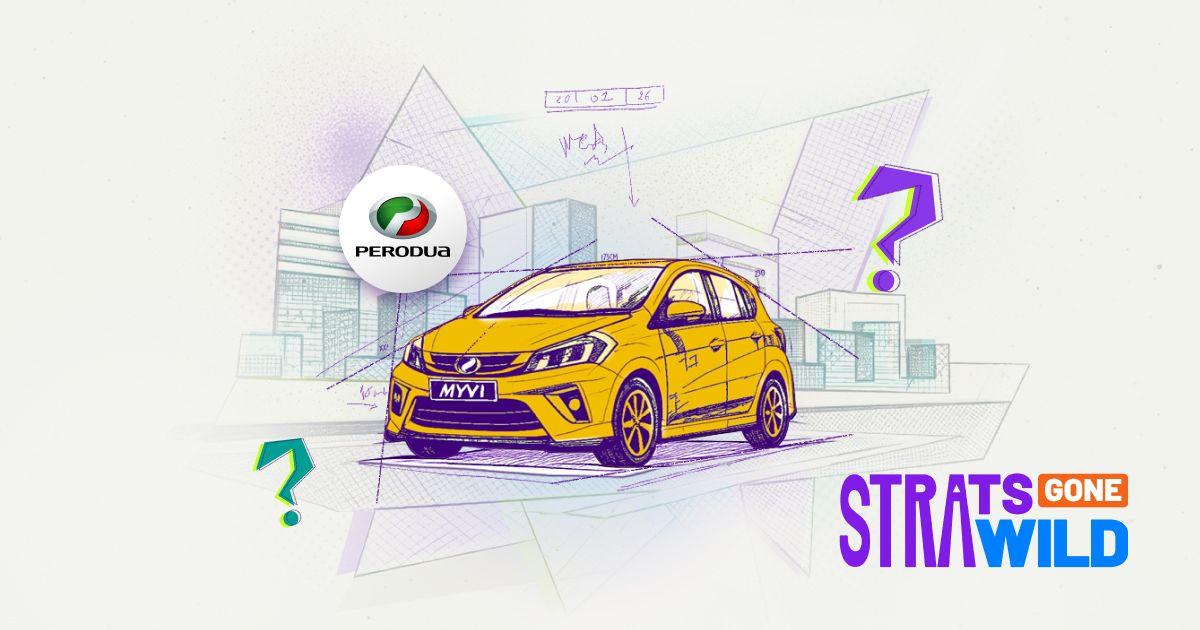



This article is part of a series called "Strats Gone Wild", a quarterly creative initiative by our team of Strategic Planners — Elaine Ewe, Mior Ahmad Anwar, Asha Nair, Neerishma Biaspal, Yip Weisi, Denise Lim, Intan Juliana, and Edmund Lou. The initiative sees the team to take on bold, unconventional briefs designed to stretch the boundaries of creative thinking. Previous pieces in this series have explored brands such as Nokia and New Balance.
For the final Strats Gone Wild creative workshop of 2025, our Strategic Planners were given the following brief: Choose from two local brands with no obvious issues and create a problem for it by framing it into a “What if?” question. Stripped of rollout plans, funnels, and channel thinking, the task was to anchor each response in one core idea that pushed the brand into new cultural, emotional, or social territory
One of the brands was Perodua.
Perodua is the most common car on Malaysian roads, ranked number one as the most popular car make last year by Road Transport Department (JPJ). The brand does not struggle with awareness, trust, or relevance. Woven into daily routines and family histories across generations, Perodua’s challenge is no longer about standing out, but about staying meaningful. This piece explores how the brand’s greatest strength, its commonness, can become a platform for new meaning.
What if Perodua stopped being just the most common car in Malaysia, and started redefining what that commonness could do?
The four ideas that follow reimagine Perodua not simply as a product, but as a participant in Malaysian life, bringing the “People First” in its Building Cars, People First philosophy to the forefront.
Disclaimer: None of these ideas suggest what Perodua should do. They exist to explore how far the brand’s meaning could stretch when freed from category conventions.
The insight
In most accidents or roadside emergencies, the first people to help are rarely the authorities. Assistance usually comes from whoever happens to be nearest to the scene. In Malaysia, given how widespread Perodua ownership is, that nearest person is statistically likely to be driving a Perodua.
What is it
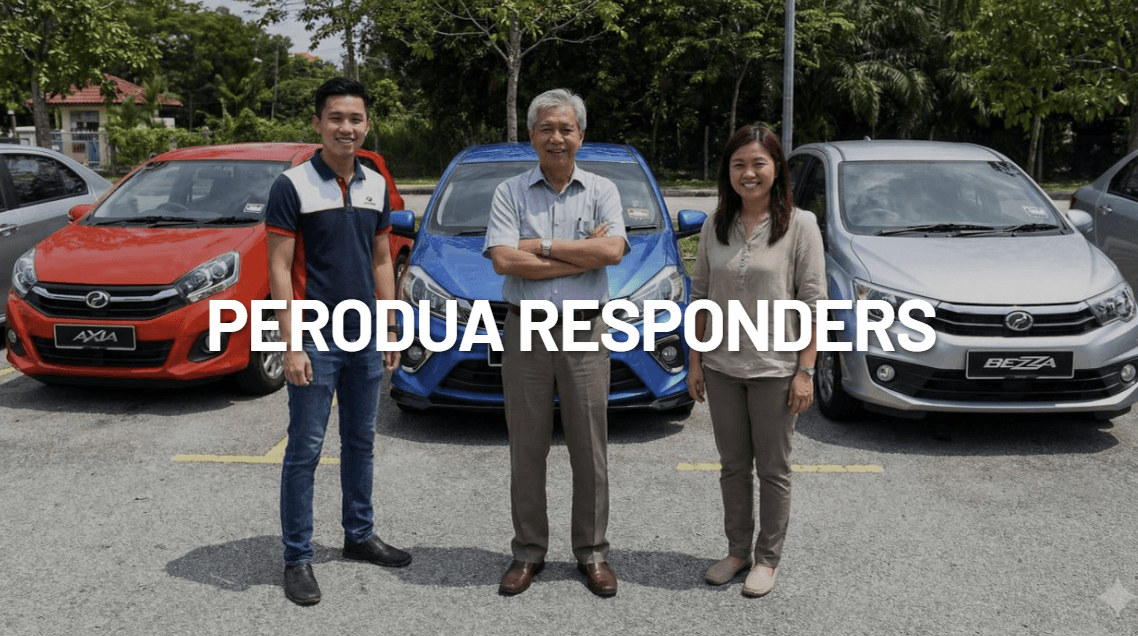
A system designed to mobilise Perodua owners to assist others during nearby traffic incidents or roadside emergencies, turning everyday proximity into collective support.
How it works
Perodua owners can opt in via an app, website, or QR sign-up to become “First On Scene”. When an incident is flagged, nearby opted-in drivers receive a gentle alert and can choose to help if it is safe to do so.
After the event, the driver receives a simple notification: “You helped someone today.” Over time, the platform can surface collective impact, for example, “This month, Perodua owners were First On Scene 3,214 times.”
Why it is a meaningful differentiation
Most automotive brands compete on performance, technology, or innovation. Perodua is uniquely positioned to compete on presence. By turning ubiquity into usefulness, the brand reframes being common as a collective advantage, one that quietly helps Malaysians when they need it most.
The insight
Buying a car has increasingly become a public statement shaped by social comparison. Choices are scrutinised online, measured against peers, and often judged through the lens of status.
What is it
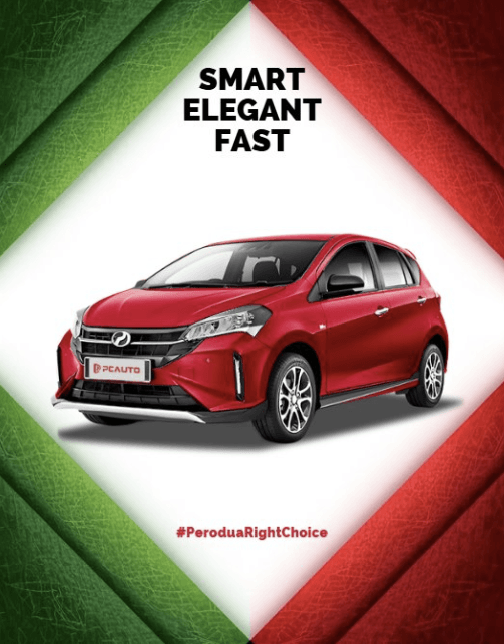
For many young Malaysians, purchasing their first car represents more than mobility. It represents judgement. In a culture driven by upgrades, flex, and online opinion, the anxiety is not whether a car is good, but whether choosing it will later feel like a mistake. Some Gen Z buyers feel pressure to opt for foreign brands that signal status, even at the cost of greater financial burden.
The Right Choice reframes Perodua as the decision you do not regret, because it is chosen with clarity, confidence, and long-term sense.
How it works
Through a community-led approach that includes short-form content, user-generated stories, on-ground moments, and real owner narratives, Perodua is positioned as the car chosen with intention rather than noise.
The emphasis is not on aspiration or status, but on confidence: stories of first-time owners, long-term reliability, and decisions that have stood the test of time.
Why it is a meaningful differentiation
Rather than chasing Gen Z through trend-led messaging, Perodua leans into its strengths: decades of trust, proven reliability, and a nationwide ecosystem built for long-term ownership. It becomes the brand that validates choosing sense over spectacle, and makes that choice something to be proud of.
The insight
Cars spend most of their lives doing nothing. They are parked, idle, and waiting.
What is it
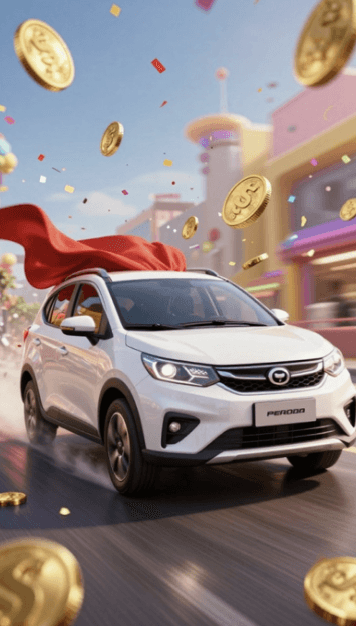
A program that turns a Perodua’s idle, parked time into tangible rewards, helping owners offset the everyday costs of car ownership.
How it works
When parked in designated locations, owners can activate Park & Earn via the Perodua app. The car displays subtle, localised digital ad messages such as nearby café offers, community announcements, or nearby automotive support services relevant to Perodua owner.
Earnings can be redeemed to offset fuel costs, servicing, instalments, or maintenance, or converted into e-wallet credits for more flexible spending.
Why it is a meaningful differentiation
Park & Earn reframes car ownership from pure liability into shared value. Grounded in trust and scale, Perodua becomes a brand that actively helps Malaysians manage financial pressure, turning everyday practicality into emotional relief.
The insight
Shopping malls can be as chaotic and congested as traffic jams. While Perodua already own the roads, could they also own the walkways with a different type of vehicle?
What is it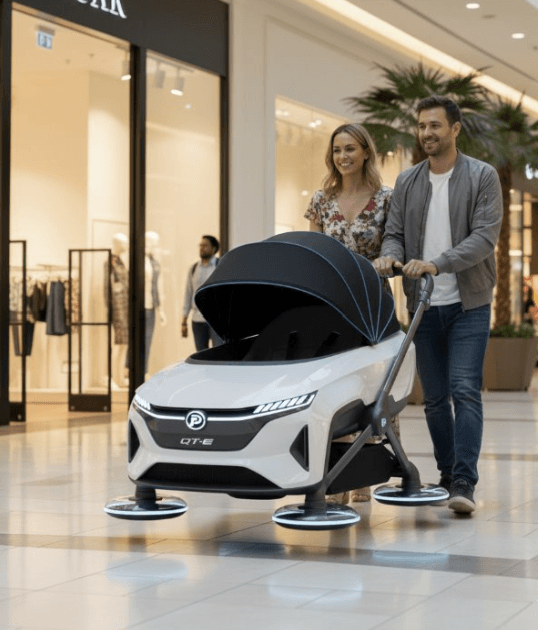
The world’s first floating electric stroller, imagined as a bold extension of Perodua’s people-first philosophy beyond roads and into everyday family life.
How it works
Designed for malls, walkways, and urban spaces, the QT-E Stroller reimagines mobility for parents. Fully electric with safety features, and visually distinctive, it aims to remove friction from one of the most emotionally and physically demanding life stages.
Why it is a meaningful differentiation
While Perodua has long owned the streets, this idea identifies Malaysia’s second most crowded space, shopping malls, as a new cultural frontier. By applying its affordability and accessibility mindset to parenthood, Perodua positions itself as a brand that supports Malaysians not just as drivers, but as families, across generations.
None of these ideas solve an obvious problem for Perodua.
That’s intentional.
They are offered as strategic provocations, not because Perodua is lacking, but because strong brands are often the most interesting ones to stretch. When a brand is this embedded in everyday life, the opportunity isn’t to chase relevance, but to explore how it can be rediscovered in new forms.




January 8, 2025
April 14, 2025

October 31, 2025

 Thank you for your enquiry! We'll respond shortly.