Close




Article written by Samantha Lim, Senior Marketing Executive
What happens when brands stop talking at the internet and start talking like they're part of it?
Think of a mascot behaving like a celebrity, a brand account responding to comments like your funniest friend, a company turning itself into a meme, or a product account posting something so absurd that you have to wonder whether there is actually a social media manager behind it.
These are the brands we might call “chronically online.”
The term usually describes brands that understand and actively participate in internet culture. They know the memes, understand the references, recognise how their audiences communicate and, perhaps most importantly, know when to join the conversation. One of the most recognisable expressions of this behaviour is unhinged marketing, a social-first style built around absurd humour, self-awareness, memes and unexpected creative choices.
But being chronically online doesn't necessarily mean being unhinged.
A brand can be highly online without constantly being chaotic. It might understand how its audience behaves on different platforms, participate in relevant cultural moments, or communicate in a way that feels native to social media rather than like a traditional advertisement squeezed into a feed. In other words, being chronically online is about understanding the culture, while unhinged marketing is one way of expressing that understanding.
And despite how random it might look from the outside, the best unhinged marketing examples are rarely random at all.
For years, brands were taught that advertising needed to look polished, professional, and controlled. Social media changed the rules. People don't necessarily stop scrolling because something looks polished; they stop because something catches them off guard, makes them laugh, teaches them something or feels like something another person would actually post.
That's where chronically online brands have an advantage. They don't treat social media simply as another advertising channel, but as a space where culture is happening. Instead of asking, “How do we promote this product?”, they can ask, “How would our audience talk about this if we weren't a brand?” That small shift can make branded content feel considerably more natural.
It can also help brands appear more human. Younger audiences, in particular, have grown up navigating the internet where the boundaries between brands, creators, celebrities and ordinary users are increasingly blurred. A corporate-sounding post can stand out for all the wrong reasons, while a brand that understands the language of the platform can feel more like a participant than an interruption.
There is also a practical reason brands are drawn to this style: engagement. A like is easy to give and easy to forget, while a share, comment or conversation requires more effort. Funny, surprising or highly relatable content gives people something to react to and, more importantly, something to send to someone else. When someone tags a friend and says, “This is so you,” the brand has entered a conversation it didn't have to pay to start.
That doesn't mean humour or memes automatically make content effective. The real value comes from making the brand feel like it belongs in the conversation.
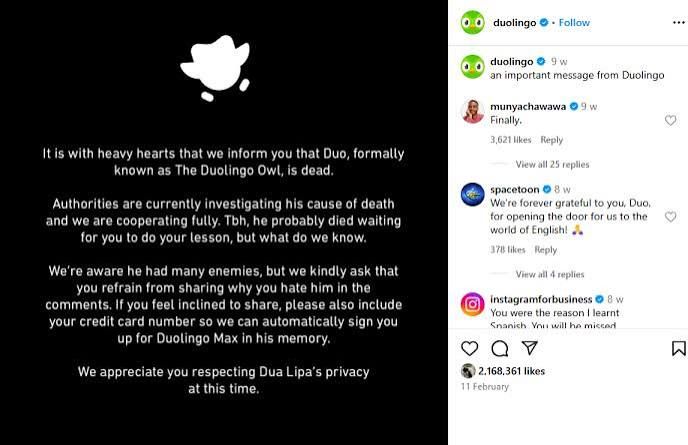
Duolingo is probably one of the most recognisable examples of a brand becoming genuinely native to internet culture.
Its green owl, Duo, stopped behaving like a conventional language-learning mascot a long time ago. Instead, the character became an internet personality in his own right, with the brand leaning heavily into exaggerated threats, absurd humour, pop-culture references and deliberately chaotic content. Its TikTok presence grew into a major part of its identity, with more than 16 million followers, while its infamous 2025 “death of Duo” campaign turned the mascot's fictional demise into an ongoing social storyline (Oestreicher, 2026).
The campaign eventually tied Duo's return to a community goal of 50 billion XP earned within the app. That is what makes the campaign particularly instructive: it wasn't simply a viral joke. The joke led people back to the product, giving audiences a reason to engage with Duolingo itself rather than simply watch another funny brand video.
This is where the unhinged marketing strategy behind the chaos becomes apparent. Duo's personality is exaggerated, but it is still recognisably Duolingo. The brand didn't suddenly adopt an entirely different personality because memes were trending; it built a character that could repeatedly operate within internet culture while still reinforcing what the product does.
The lesson isn't to simply “be more chaotic”. It is to build a personality strong enough that your audience knows what to expect, even when they don't know exactly what you'll post next.
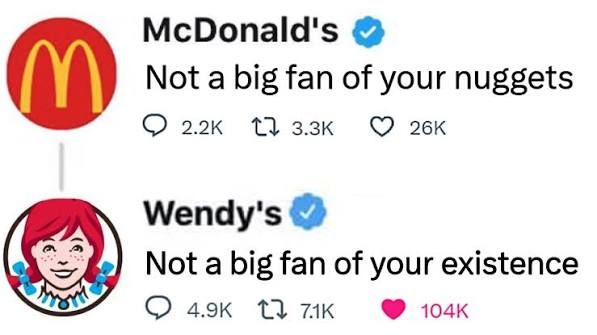
Wendy's took a different approach. Its social media presence became known for sarcastic replies, playful insults and a willingness to interact directly with users, turning what could have been ordinary customer interactions into opportunities for entertainment.
Someone asks about boxers or briefs? “We are a restaurant.” Someone asks how much a Big Mac costs? “Your dignity.”
The appeal isn't simply that the replies are funny. It's that they are consistent. Wendy's has established a recognisable personality: confident, cheeky and slightly antagonistic in a way that feels deliberate rather than accidental (Swiers, 2026). That personality gives people a reason to interact with the account, and over time, people weren't simply seeing Wendy's posts; they were talking to Wendy's.
That changes the role of a brand account. It is no longer just a broadcasting channel but a participant in the culture surrounding it.
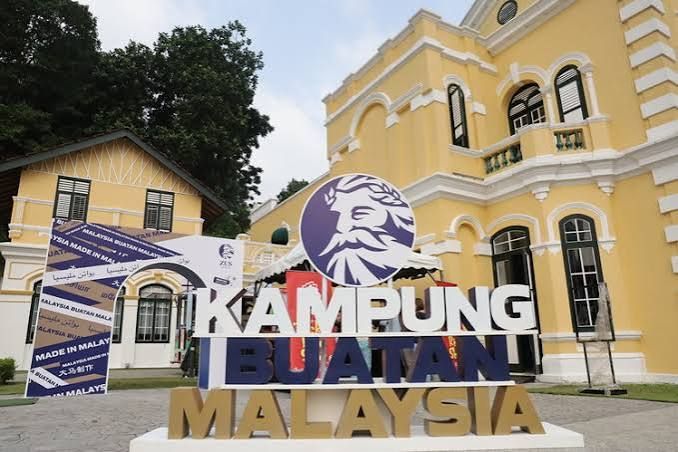
Closer to home, ZUS Coffee offers an interesting example of what being chronically online can look like in a Malaysian context.
Unlike a brand such as Duolingo, ZUS doesn't need to rely on an aggressively chaotic mascot or an intentionally unhinged persona to remain culturally relevant. Instead, much of its social presence is built around something more familiar: understanding Malaysian humour, language, culture and everyday behaviour, then making those things part of the brand itself.
That approach fits naturally with ZUS's broader positioning. The brand describes itself as a Malaysian, technology-driven coffee chain focused on making specialty coffee an everyday “necessity, not a luxury”, while its digital ecosystem spans its app, social channels and online ordering experience.
One of the clearest examples is its Made In Malaysia platform. Rather than treating Malaysian identity as something to mention only around Merdeka or Malaysia Day, ZUS has turned local pride into a recurring brand territory. Its 2024 campaign brought together a wide range of Malaysian brands, creators and personalities, including Munchy's, Spritzer, BananaBro, Inside Scoop, Pestle & Mortar, POS Malaysia and Jenn Chia, under the idea of celebrating things made in Malaysia.
The campaign was not simply about selling coffee. It positioned ZUS as part of a wider Malaysian community, while giving the brand plenty of cultural material to participate in online. Its social content could speak in a way that felt familiar to Malaysians because the cultural references were already part of the brand's world.
ZUS has also demonstrated a willingness to let its audience participate in the content itself. In 2025, for example, it ran a “Create Your Own Secret Menu” initiative that encouraged customers to invent their own drinks, upload them through Instagram Stories and tag the brand using #wecreatetogether.
This is an important part of being chronically online: the audience isn't simply watching the brand. They are given opportunities to play along.
Even its earlier “ZUS Coffee On Trial: Buatan Malaysia?” campaign demonstrates how the brand uses humour and entertainment on social media to communicate a brand message. Framing its Malaysian identity as a mock courtroom drama allowed ZUS to talk about being locally made without resorting to a conventional corporate declaration.
What makes ZUS particularly relevant to this conversation is that it shows brands don't have to imitate the most chaotic accounts on the internet to feel culturally relevant. Its approach is less about being deliberately weird and more about understanding what makes Malaysian internet culture, well, Malaysian.
No, and that's probably the most important takeaway.
The success of Duolingo or Wendy's doesn't mean every brand should suddenly start posting memes, roasting customers or making its mascot behave like a celebrity. In fact, doing so without the right foundation can backfire. A brand that has spent years communicating in a polished, serious and authoritative tone probably shouldn't suddenly start speaking entirely in internet slang because a meme is trending.
That's not authenticity. That's whiplash.
The first question shouldn't be, “Can we jump on this trend?” It should be, “Does this make sense for us?”
Before participating in a trend, brands should first understand where it came from and what it actually means. A meme may look harmless when removed from its original context, but its meaning can be very different to the communities that created it. Brands should also look at how their own audience is participating. Something being viral doesn't automatically make it relevant, and a trend can have millions of views while having very little relevance to the people a brand is actually trying to reach.
Then comes the most important question: Can the brand add something?
If removing the logo wouldn't change the joke, why does the brand need to be there? The strongest trend participation doesn't simply copy what everyone else is doing. It finds a way to make the trend relevant to the brand's own world, product or audience.
Brand personality matters just as much. A trend should stretch a brand's personality, not replace it. If a brand wouldn't naturally say something in a normal conversation, forcing it into a meme probably won't make it more authentic.
And, of course, there is timing. Internet culture moves quickly. By the time a trend goes through the brand approval process, three rounds of copy edits and six stakeholder comments, the internet may already have moved on. Speed matters, but being first isn't necessarily the goal. Being relevant is.
There is a very real risk to brands trying to appear more human online. Sometimes, they end up sounding like they are trying to impersonate humans, and audiences are usually quick to notice the disconnect.
Think of a corporate account suddenly using slang it has never used before, a serious brand forcing itself into a meme, or a company copying a joke that worked for another brand without understanding why it worked. The result isn't authenticity; it's awkwardness. And social media makes that awkwardness very public.
This is why “unhinged” should never mean “uncontrolled”. The brands that do this well usually have very clear boundaries. They know what they stand for, who they are talking to and what their audience finds funny. They know which parts of their personality can be exaggerated and which parts shouldn't be touched.
It's easy to look at these brands and assume their success comes from being brave enough to post weird things. But the weirdness isn't the marketing strategy. The personality is.
Duo behaves like Duo. ZUS talks like a brand that understands Malaysian culture. Wendy's sounds like Wendy's. Their content can be unpredictable because the brands themselves are predictable: the audience understands the personality behind the post, even when they don't know exactly what the next post will look like.
That is the paradox of being chronically online. Your content can be unpredictable when your brand is predictable.
A strong brand personality gives you permission to take creative risks. Without that foundation, those risks simply look random.
So, should brands participate in internet culture? Absolutely. But don't start with the meme, the hashtag or whatever everyone else is doing. Start with the brand.
What does it sound like? What would it joke about? What would it never joke about? What does its audience already talk about? And, most importantly, what can this brand say that another brand couldn't?
Because being chronically online isn't really about posting more. It's about understanding the internet well enough to know when your brand belongs in the conversation.
References:



June 30, 2026

June 15, 2026
May 11, 2026

 Thank you for your enquiry! We'll respond shortly.