Close



The ad landscape is saturated with digital assets—photos, music, videos, animations, and interactive ads—all intended to capture the consumer’s attention.1 From a boosted social post to multi-channel ad delivery, the question we often ask is, “Is this ad reaching the right audience?”
In today’s content-rich world, there’s no avoiding it. You’ve got to make sure your ads are relevant to your buyer persona, that they’re quality-controlled, and you’ve also got to scale these efforts. You’d eventually wonder how many more ads you need to serve and if you can optimise and save costs.
All without creative teams burning out.
The best way to keep up? Eliminate the manual creative process. Dynamic Creative Optimisation (DCO) and Digital Creative Automation (DCA) are two types of automation tools worth considering. Though they sound similar, their uses are fairly different.
So, what are the differences between DCO and DCA?
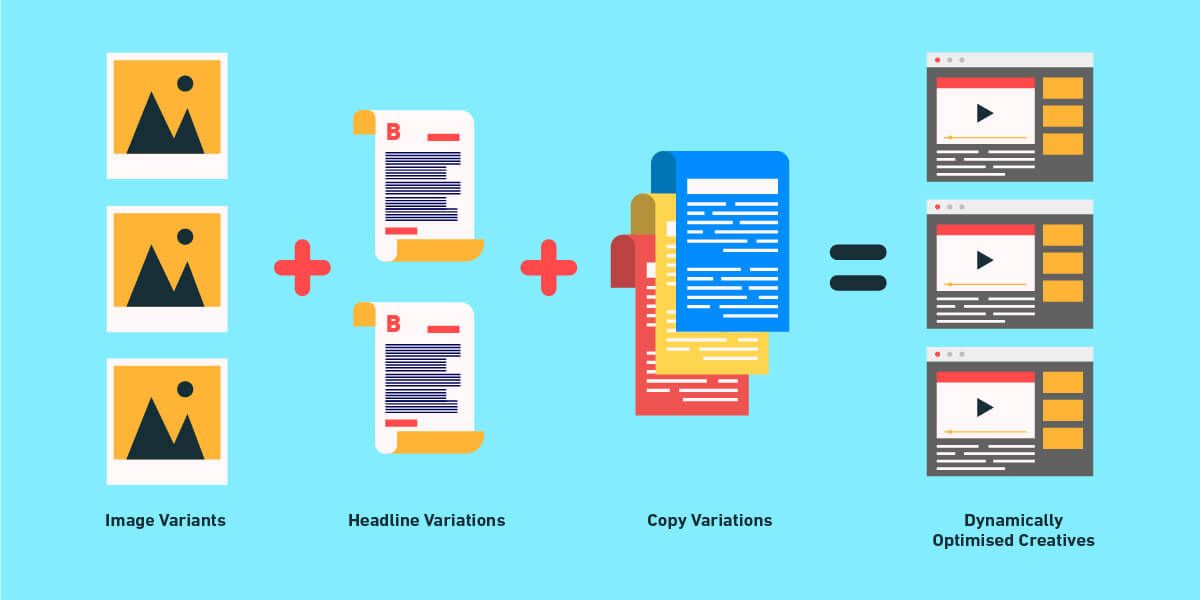
As the name suggests, there are two parts to it :
“This technique enables you to create multiple iterations at speed. By combining the dynamic elements with analytics, it becomes easier to resonate with your audience and optimise creatives for an increase in relevance and ad performance.”
In short, DCO is a useful tool that enables visual asset creation on the fly. However, what is DCO’s most unique feature is also its biggest limitation.
Though DCO is powerful, its creative flexibility is a limitation worth considering, particularly if that’s a workflow you find important. In this case, it’s worth trying a hyper-focused asset-creation tool: DCA.

Unlike DCO, Digital Creative Automation (DCA) focuses entirely on removing manual adjustments to creative assets through automation.
Why would this matter?
Imagine taking a single creative asset and localising it for multiple markets, in different regions, with different languages.
“Most creative teams spend between 30-50% of their time managing the manual process of design adaptation, forming a creative bottleneck that ultimately compromises the agility of a marketing agency or team.”
DCA helps you eliminate these manual workflows and creates space for your team to work on what impacts ROI: creativity.6
By optimising the creation of better, more relevant visuals, you can keep up with the sheer amount of creative assets needed for your ad campaigns and you can maximise each asset’s visual impact.
There are 3 reasons why DCA is ideal for those who are seeking creative automation solutions and need flexible content production.
1. DCA is platform agnostic
Our biggest flex is how integrative DCA is. It’s not tied to a specific DSP or media platform, so it’s flexible enough to produce various types of ad assets for any server. This saves you time and costs, especially if you’re new to adding an automated component to your workflows.
2. DCA is flexible across multiple types of creative production
With DCA smart template, you can adapt any type of content—think static visual, video animation, HTML5 Banners etc.—to your needs. DCA lets you churn out creative assets across multiple channels, modify languages for different countries, and target varying audience segments.
3. DCA helps you better understand your consumers through personalised creative
Having personalised ad variations lets you test and gather consumer insights. This helps you understand how your consumers respond to different types of creative content and what resonates with them. Focusing on what works then leads to overall improved campaign performance and better ROI.
These creative automation solutions are ideal for different situations, so which tool should you go for? We recommend first examining your needs and what automation can do for you.
If you already have a robust media buy workflow in place, are looking to understand what content speaks to your audience, or you’re looking to try out automation, DCA is our recommended option. It’s the solution to root out inefficiency, create resonant and engaging ads, and help you capture consumer attention.
See how we’ve helped Grab save 80% in man-hour costs.
If you’re ready to launch a personalised ad campaign with DCA, get in touch to schedule a demo.
References:
1. Digital and Marketing Asset Management: The Real Story About DAM Technology and Practice
2. Dynamic Creative
3. What is the difference between Programmatic creative and DCO?
4. The ins and outs of Dynamic Creative Optimization
5. Why Creative Automation?
6. How creative automation tools can help teams elevate marketing personalization




June 7, 2024

June 19, 2024

March 21, 2024

 Thank you for your enquiry! We'll respond shortly.